Why This Clearance Matters
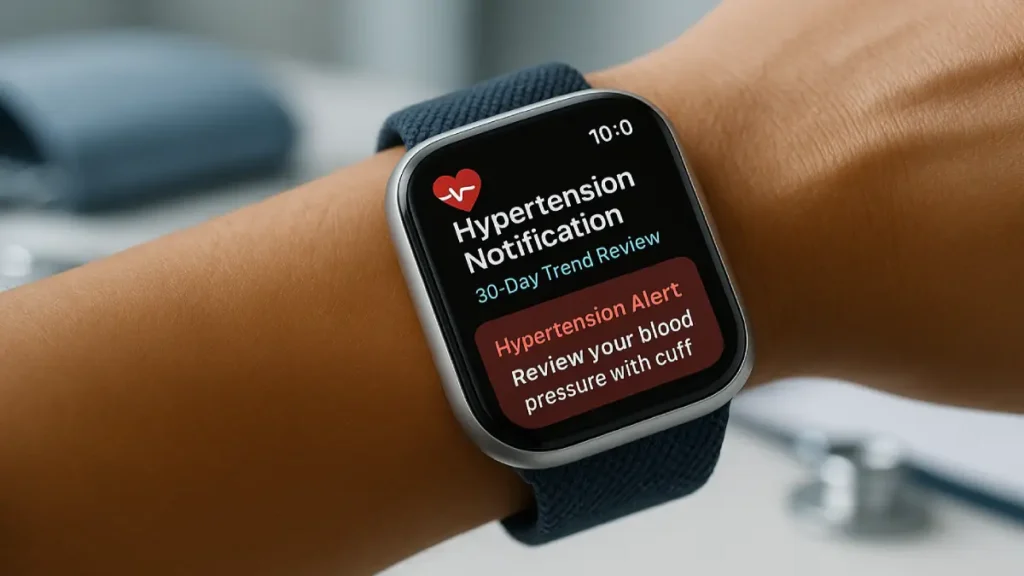
The newly FDA-cleared hypertension notification on Apple Watch is positioned as a regulated health feature, not just a wellness metric, signaling higher clinical expectations and potential integration into care. It evaluates 30-day patterns via optical sensing to flag potential chronic hypertension, prompting medical follow-up rather than replacing cuff-based diagnosis.
What the Feature Actually Does
- It does not provide blood pressure numbers; it issues a notification when a sustained pattern suggests hypertension risk over a rolling 30-day window.
- It relies on Apple Watch’s optical heart sensor and algorithmic trend analysis, serving as triage for attention rather than a definitive diagnosis.
Fit Within Clinical Workflows
The alert becomes a “reason to measure,” steering people to home cuffs, ambulatory monitoring, or primary care confirmation aligned with guideline-first diagnosis. Because it’s regulated, clinicians may treat alerts as more actionable than wellness nudges, improving documentation and standardized follow-up.
Rollout: Models, Regions, Timing
Availability is expected in 150+ countries and regions on eligible models—Series 9 and newer and Ultra 2 and newer—arriving via a software update rather than requiring new hardware. The launch aligns with Apple’s September cycle alongside Series 11 and Ultra 3, accelerating reach across the installed base.
Ecosystem Ripple Effects
- Consumer wearables: Competitors will likely pursue regulated, longitudinal hypertension signals, investing in validation and filings.
- Primary care: New triage scripts for 30-day alerts and increased emphasis on home BP kits could emerge.
- Payers/employers: Clearance may catalyze coverage for confirmatory testing and disease management due to the cost burden of untreated hypertension.
- Public health: Earlier detection at scale could reduce strokes and MIs if alerts convert to confirmation and treatment.
What It Is—and Isn’t
This is a passive, longitudinal risk signal augmenting detection, not a cuff, not a real-time BP reading, and not a diagnosis. The intended path is alert → clinical confirmation → treatment if warranted, acknowledging possible false negatives/positives and the need for follow-up.
Strategic Context: Apple’s Health Stack Move
The feature extends Apple’s trajectory from fitness to regulated cardiometabolic risk, complementing prior AFib and other health capabilities. The 30-day trend lens shifts wearables from momentary events to condition-level monitoring, potentially enabling reimbursement and research integrations.
Risks and Open Questions
- Sensitivity/specificity will determine clinical trust; alert fatigue and missed cases remain key concerns.
- Equity is a challenge, as high-burden populations may have lower access to premium wearables without partnerships or subsidies.
- Interoperability with EHRs will influence whether alerts trigger standardized, scalable follow-up.
Bottom Line
With FDA clearance and broad software-based rollout, Apple Watch adds a regulated hypertension alert that reframes wearables as triage engines—valuable if it reliably drives confirmation and treatment. If execution matches ambition, the detection curve for a leading cardiovascular risk factor could shift meaningfully in the near term.