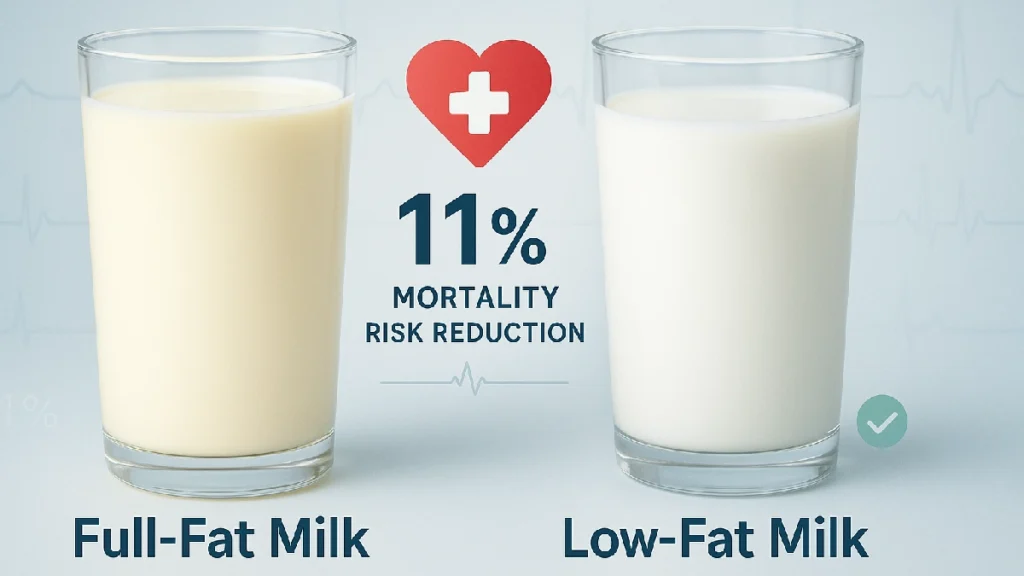
A comprehensive Norwegian study spanning 33 years has revealed that low-fat milk is significantly safer for heart health than full-fat milk. Researchers tracked 73,860 participants and found that consuming low-fat milk was associated with an 11% lower all-cause mortality risk and a 7% lower cardiovascular disease risk compared to whole milk.
Study Design and Findings
Research Methodology
The research, published in The American Journal of Clinical Nutrition, analyzed data from Norwegian health screenings conducted between 1974 and 1988, tracking participants for over three decades. The study recorded 26,393 deaths, including 8,590 from cardiovascular disease, providing robust data for analysis.
Key Mortality Findings
Researchers found that participants who consumed the most milk overall had a 22% increased risk of all-cause mortality and a 12% increased risk of cardiovascular death compared to those who drank the least. However, when the analysis separated milk types, whole milk emerged as the primary driver of increased mortality risk.
Direct Comparison Results
Cardiovascular Benefits of Low-Fat Milk
When directly comparing the two milk types while adjusting for total consumption, low-fat milk consumers showed significantly better health outcomes. Specifically, low-fat milk was associated with:
- 11% lower all-cause mortality risk
- 7% lower cardiovascular disease mortality risk
- Reduced risk of ischemic heart disease and acute myocardial infarction
Mechanisms and Supporting Evidence
Saturated Fat and Cholesterol Connection
The findings align with established cardiovascular health principles regarding saturated fat. Whole milk contains higher levels of saturated fat, which can raise LDL (“bad”) cholesterol levels in the blood. Available blood test data from the study confirmed that whole milk drinkers consistently had higher LDL cholesterol levels compared to low-fat milk consumers.
Study Limitations and Context
Participant Characteristics
The study authors noted that low-fat milk drinkers tended to have other healthy lifestyle characteristics, including being more likely to be female, have higher education levels, and be non-smokers. However, the associations remained statistically significant even after adjusting for these confounding factors.
Current Scientific Debate
Conflicting Research Perspectives
While this Norwegian study provides strong evidence favoring low-fat milk, the broader scientific community remains divided on dairy fat and heart health. Some recent research suggests that dairy consumption may be “neutral” for cardiovascular risk regardless of fat content. However, Harvard nutrition experts emphasize that the comparison matters – dairy often replaces less healthy foods in studies, potentially masking its true health effects.
Clinical Guidelines Support
The Norwegian study’s findings support current NHS health guidelines, which recommend limiting saturated fat intake to reduce cardiovascular disease risk. The evidence suggests that for heart health specifically, low-fat milk appears to be the safer choice compared to full-fat alternatives.